Appointments Available: Monday-Friday 8:00am-5:00pm, Saturday By Appointment Only

Appointments Available: Monday-Friday 8:00am-5:00pm, Saturday By Appointment Only
Appointments Available: Monday-Friday 8:00am-5:00pm, Saturday By Appointment Only
Appointments Available: Monday-Friday 8:00am-5:00pm, Saturday By Appointment Only
Medicaid Planning
The customized plan you need— with the lawyers you trust.
Rusty Fracassa and the staff at Paths Law Firm serving Kansas City are the most compassionate, attentive, and experienced elder law planners and advocates in the KC metro area.
We offer multiple office locations for your convenience. We can also meet at your home, the hospital, or a nursing home for those less able to visit our office. Meeting with clients on Saturdays to accommodate their schedule is just one of the perks of working with us.

The Issue and Planning for Medicaid
Medicaid is a joint federal and state program that provides financing for medical treatment for those unable to afford to pay. Medicaid covers physicians’ services, hospital care, supplies and other required services once a person has been made eligible for the program. It also covers the costs of nursing home care for the elderly.
Each state administers its own Medicaid program independently. While the basic eligibility requirements are the similar across the United States, there are substantial variances between the Medicaid programs of each state. In spite of these variations, eligibility is often determined by a combination of a person’s assets and income. State Medicaid offices decide eligibility, and in the case of married applicants, both spouses’ assets and income are considered.
It is essential to differentiate Medicare and Medicaid. Medicare is an insurance program that pays for the medical expenses of those aged 65 and older and some individuals with disabilities. All adults 65 and older, regardless of financial means or income, are eligible for Medicare. Medicare and Medicare supplementary insurance, however, give extremely little reimbursement for the expense of nursing home long-term care. Unless the individual has coverage under a long-term care insurance policy, these non-covered services must be paid privately by the individual. Medicaid, on the other hand, covers for medical requirements for persons of any age that have been proven to be qualified. In reality, a Medicare recipient with little income and assets may also qualify for Medicaid benefits.
Medicaid is regarded as one of the most complex laws in the United States, and the situation is further complicated by the fact that each state has its own version of Medicaid. Numerous Elder Law Attorneys are able to assist clients because they have researched the Medicaid statutes and regulations thoroughly.
Medicare does not cover the costs of long-term care for conditions such as Alzheimer’s disease or paralysis resulting from a stroke, thus Medicaid is frequently important to middle-income Americans. The majority of people who require long-term care will eventually exhaust their assets and be unable to pay for their care.
Medicaid is then available to pay the difference between their income and the actual costs of nursing home care, including room and board, medical treatment, hospital care, and all other reasonable and necessary medical expenses. Medicaid supports the costs of such care in nursing homes, adult care homes, hospices, and, where necessary, the individual’s own home.
If you anticipate incurring such long-term care bills, you should be aware of the following rules:
In assessing eligibility for Medicaid payment of long-term care expenses, the eligibility team will evaluate the individual’s actual need for care, the individual’s available resources (including life insurance and retirement plans), and the individual’s total income. In some places, if an individual’s monthly income exceeds a specific threshold, he or she is ineligible for Medicaid, even if long-term care expenses outweigh income.
In evaluating eligibility, a person’s recent charitable contributions will disqualify them from Medicaid.
The assets and income of both spouses are evaluated when evaluating eligibility for one spouse, regardless of premarital agreements, community property rules, or the nature of asset ownership.
However, married couples’ assets are treated differently so that the spouse who remains at home is not unjustly impoverished. Such a community spouse is entitled to retain one-half of the couple’s accessible assets (up to a federally-established maximum) and a minimum amount of the couple’s income in order to cover domestic support expenses (See below for details on Division of Assets).
In addition, there are resources that are not considered when determining eligibility; they include the family home, household goods, a vehicle, a pre-paid funeral fund, and other necessities.
Before applying for Medicaid, it is essential to understand the state-specific eligibility requirements and exemptions so that assets are not excessively depleted.
Lastly, it is essential to understand that appeals systems are integrated into the Medicaid system. If you disagree with Medicaid eligibility determinations, care decisions, or placements, there is a procedure for an administrative hearing and even legal action to vindicate your rights.
Source: National Academy of Elder Law Attorneys NAELA.org

Frequently Asked Questions
The Spousal Impoverishment Law, often known as the Division of Assets, modifies the Medicaid eligibility requirements for couples where just one spouse requires nursing facility care. It permits the spouse remaining at home to safeguard a portion of income and assets. The spouse in need of care can acquire Medicaid sooner without the other spouse falling into poverty.
Yes, but only if your spouse can demonstrate a medical requirement for nursing home placement and meets federal and state eligibility requirements.
You must satisfy the following conditions:
You must contact KanCare to receive the necessary forms. You will be required to submit an application for Medicaid. You will be required to list every asset you and your spouse hold. The KanCare worker will decide how much of the community spouse’s resources can be protected. If there is a need to shift resources to the at-home spouse, the KanCare worker will notify you and provide you with the necessary documents.
Based on the information provided on the evaluation form, you will split the available resources. It may be necessary to transfer certain assets from the institutionalized spouse to the at-home spouse. You will be informed if any resources require transfer. You may also contact an attorney for assistance with the legal paperwork involved in the transfers. Do not add other people’s names to any assets during the transfer process without first consulting with KanCarefirst, since doing so could result in a delay or cancellation of Medicaid coverage for nursing facility payments. Medicaid benefits might be paid for up to ninety days while the real property transfer takes place. In some situations, extensions may be granted if you have been actively transferring ownership but have not yet completed the process.
Certain items are excluded from the Medicaid determination. These are exempt resources, which you may retain.
You may retain the larger of the first $25,284 of total non-exempt assets or half of the total non-exempt assets owned at the time your spouse joined a nursing facility. The maximum amount of retained stock is $137,400. These amounts are subject to vary on a yearly basis, so contact Kancare for the most up-to-date information. The remainder of the total assets is believed to be available to the institutionalized spouse.
The amount of assets that can be preserved is based on the entire amount of non-exempt assets owned by the marriage at the time the spouse initially entered an institution. This number is derived from the data you give and confirm on the Resource Assessment form. Alternatively known as the Community Spouse Resource Allowance.
After Medicaid approval, the LTC spouse may be responsible for a percentage of his or her medical expenses. The cost of care is determined by the institutionalized spouse’s monthly income. A $62 allowance for personal necessities is removed from the gross monthly income, along with any medical expenses not covered by Medicaid or any third party, such as health insurance premiums. This amount is also subtracted if the stay-at-home spouse is qualified for an income allowance as indicated above. The remaining funds, if any, are paid to the nursing home towards the cost of care. This amount is referred to as the patient or client duty.
No transfers should be made until all documentation has been completed and the amount of income and assets that the at-home spouse is permitted to retain has been decided. Transfers made prior to enrolling in KanCare might often affect Medicaid eligibility. Always seek KanCare’s prior consent before moving any funds or income.
Legally, the State Medicaid agency has a first-class claim against the Medicaid recipient’s estate or surviving spouse for benefits provided to the Medicaid beneficiary. The Medicaid beneficiary must have been at least 55 years old or resided in a nursing home while receiving benefits. This claim only arises after the demise of both the beneficiary and the surviving spouse. There would be no recovery if a minor or crippled child survived.
No. The couple has the option of seeking a distribution of resources, income, or both. If you do not, some assets and income will be considered available to the nursing home resident’s spouse, and he or she may not qualify as quickly.
Prior to receiving benefits, the spouse requesting for help must meet Medicaid eligibility conditions. This means that the spouse requiring care must deplete his or her part of the divided assets to the Medicaid qualifying threshold (now $2,000).
If new resources are acquired prior to the LTC spouse acquiring Medicaid coverage, they are often considered part of his or her share of assets and must be drained prior to eligibility. Due to the fact that the Community Spouse Resource Allowance is calculated as of the month of the spouse’s entry into long-term care, resources that neither spouse owned in that month cannot be included for division reasons. The spouse of a Medicaid client who is institutionalized will have their assets counted against the $2,000 limit. The receipt of resources exceeding this threshold may result in the loss of Medicaid coverage. The at-home spouse’s receipt of additional resources typically does not alter the eligibility of the other spouse for Medicaid.
Inflation adjustments will be based on changes in the Consumer Price Index. KanCare will calculate any increase automatically and adapt your case accordingly. The quantity of resources a stay-at-home spouse is permitted to retain will be determined at the time of application and will not be modified.
The statute solely applies to Medicaid eligibility for covered long-term care (nursing home), Home and Community-Based Services (HCBS), and Program of All-Inclusive Care for the Elderly (PACE).
When you and your spouse meet the following conditions.
A spouse currently resides in a nursing facility.
The income of the at-home spouse is less than $1,992.
Any property handed to a spouse is part of that spouse’s estate and will pass to heirs unless the recipient’s at-home spouse lives. According to state inheritance regulations, the receiving spouse should get at least half of the estate as an heir. If this does not occur, the recipient’s eligibility may be affected by a transfer of assets issue. If the at-home spouse survives the recipient, the State Medicaid Agency may file an Estate Recovery claim against the at-home spouse’s estate following his or her death.
No. Your heirs can only inherit your actual assets on the day you pass away. In addition, keep in mind that the estate of the spouse who stays at home will be subject to estate recovery, as stated previously.
The law only pertains to Medicaid eligibility.
Source: Kansas Department for Aging and Disability Services www.kdads.ks.gov
GET IN TOUCH













MAIN OFFICE
OVERLAND PARK
NORTH KANSAS CITY
816-524-7999
2029 Burlington St
North Kansas City, MO 64116
By appointment only
888-512-9247 (fax)
APPOINTMENTS
Monday – Friday
8:00am – 5:00pm
Saturdays
Appointment Only
RESOURCES
DISCLAIMER
The choice of a lawyer is an important decision and should not be based solely upon advertisements. The use of this website does not create an attorney-client relationship. Please contact Paths Law Firm directly.
We improve our services and advertising by using Microsoft Clarity. By using our site, you agree that we and Microsoft can collect and use this data. Our privacy statement has more details.
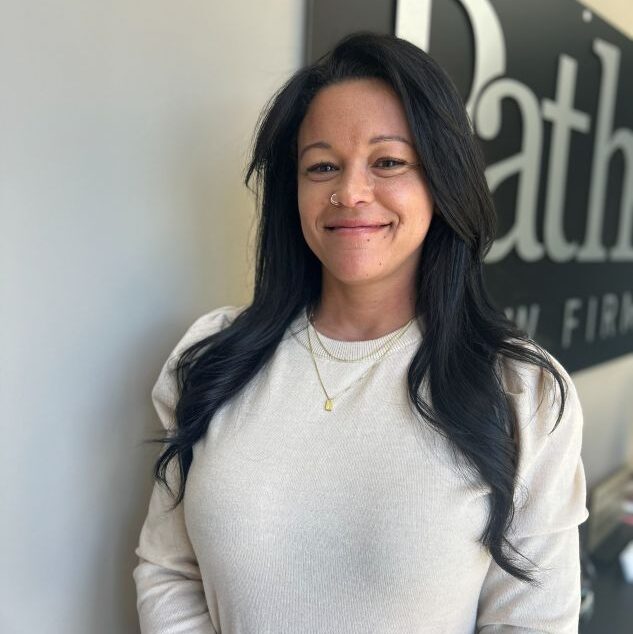
Jennifer serves as an Estate Planning Paralegal, providing comprehensive support to the firm’s attorneys and clients. She assists in the preparation of wills, trusts, powers of attorney, and other estate planning documents, ensuring accuracy, clarity, and alignment with each client’s objectives.
Before transitioning into estate planning, Jennifer gained extensive experience as a Family Law Paralegal, this background enables her to navigate sensitive client circumstances with professionalism, discretion, and a strong understanding of family dynamics.
Jennifer is recognized for her attention to detail, strong organizational skills, and commitment to delivering a thoughtful and reassuring client experience. She approaches each matter with integrity and a focus on ensuring clients feel informed and supported throughout the process.
Outside of the office, Jennifer enjoys practicing yoga, watching sunsets, and spending time in nature—activities that provide balance and inspiration in her personal life.
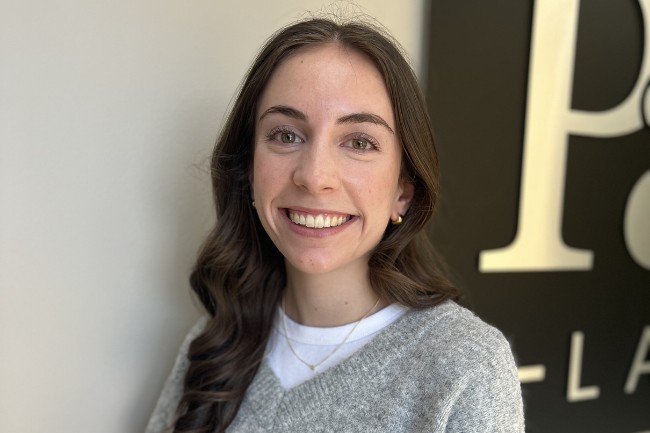
Peyton serves as the Assistant to Russell Fracassa, bringing dedication, reliability, and compassion to her role at Paths Law Firm.
With prior experience supporting small businesses in administrative and operational capacities, she has developed strong organizational skills and a sharp attention to detail that help ensure both attorneys and clients are well supported.
She is currently studying at the University of Missouri–Kansas City as an Honors Student, demonstrating a strong commitment to excellence in both her academic and professional pursuits. Peyton’s work ethic and drive are reflected in the care she brings to each task and interaction.
Outside of the office, Peyton enjoys spending time with her family, reading, and exploring new places.
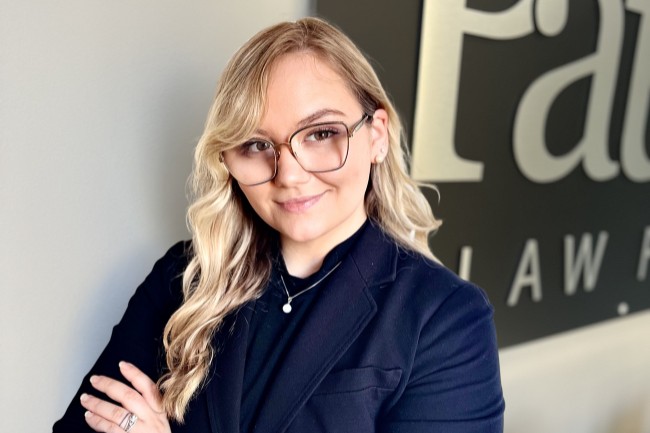
Shaye entered the field of civil law in 2022 and has quickly developed a strong foundation in client service and legal support.
Her academic background includes an Associate of Science degree in Healthcare Services and Informatics Administration and a Bachelor of Science in Interdisciplinary Studies, with an emphasis in Health and Human Services, Social Sciences, and Humanities.
This unique blend of legal experience and healthcare-focused education allows Shaye to approach her work with both analytical precision and genuine empathy — especially when supporting families navigating complex and sensitive situations.
Outside of the office, Shaye enjoys spending time with her husband and their one-year-old daughter. Whether she’s baking sourdough, working on arts and crafts, or enjoying time outdoors, she values creating meaningful moments with her family.
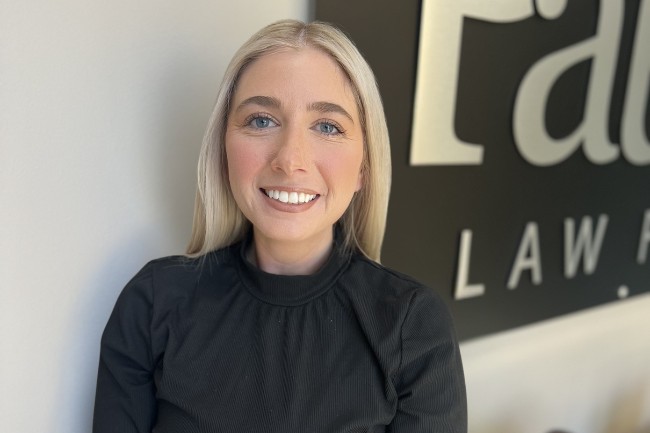
Malia serves as the first point of contact for many of our clients, helping create a welcoming and supportive experience from the very first phone call. As our receptionist, she assists with scheduling, communication, and ensuring that each interaction reflects the care and professionalism our firm values.
She understands that many families who contact our office may be navigating stressful or uncertain situations, and she strives to make every conversation feel comfortable and reassuring.
Outside of work, Malia enjoys spending time with her husband and their two children. She loves reading, watching movies, and baking with her kids — creating meaningful memories both at home and at work.
Janeece Dent-Bennett was born in Lexington, Missouri, in 1960 and graduated from Lexington High School in 1979. She graduated with a Bachelor of Science in Business Administration with a major in Accounting from University of Central Missouri in Warrensburg, MO in 1982.
In 1985, Janeece graduated with distinction from the University of Missouri-Kansas City School of Law.
Upon graduation from law school, Janeece joined the former Shughart Thomson & Kilroy, P.C. law firm (now Polsinelli) in Kansas City, Missouri, with a primary practice in corporate and business law.
She started her own law practice in 1989 and has since practiced law in Lee’s Summit, Missouri, serving clients throughout the state of Missouri with a primary emphasis in Wills, Trusts, Estate Planning, Probate, and Business Transactions.
Janeece is married and has 3 children. Jillian Dent is an attorney in Kansas City, Missouri. Nathan Dent is a Certified Public Accountant in Denver, Colorado. Andrew Bennett is an Electrical Engineer in North Kansas City, Missouri. Her husband Mark Bennett is an IT specialist contractor for the USDA.
Recently, Janeece closed her former solo law practice of 36 years and joined Paths Law Firm in Lee’s Summit, MO as Of Counsel.
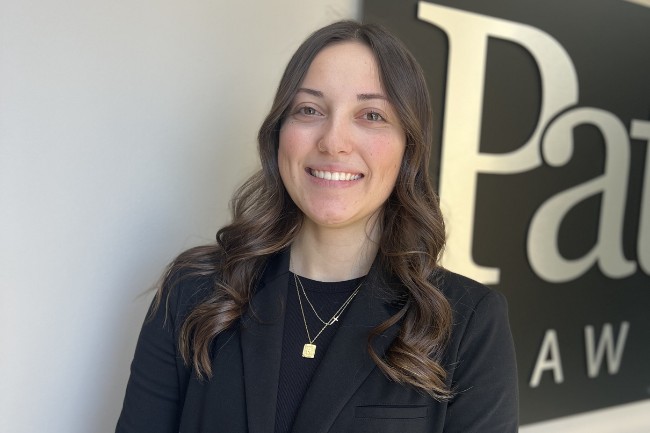
With a strong background in customer service and a passion for helping others, Reese brings dedication and a positive attitude to her role as a Legal Assistant at Paths Law Firm. She supports the team by managing client correspondence, organizing policies, and stepping in wherever needed to ensure clients receive the highest level of care. Known for her strong work ethic and adaptability, Reese is always ready to tackle new challenges and contribute to the firm’s mission.
Reese is currently enrolled in the Honors Program at the University of Missouri–Kansas City, where she continues to pursue academic excellence. Outside of work and school, she enjoys spending time outdoors and cherishing meaningful moments with her family and friends. Her enthusiasm, reliability, and drive make her a valuable part of the Paths Law Firm team.
Jeane Fracassa – a dedicated and accomplished professional who retired with an impressive 38-year service record from the Kansas City Missouri Police Department. Throughout her illustrious career, Jeane served as a Civian Supervisor in the Communications Unit, where she played a pivotal role in ensuring efficient and effective communication within the department.
Even in retirement, Jeane’s commitment to community service remains unwavering. Currently, she serves in various capacities within Community Relations at Paths Law Firm. Actively engaged in the Lee’s Summit and Overland Park communities, she proudly represents the law firm.
In all aspects of her life, Jeane Fracassa exemplifies the values of community, compassion, and family. Her commitment to making a difference and her love for exploration make her a remarkable individual, whose presence brightens the lives of those she encounters. Whether at work, with family, or during her travels, Jeane’s genuine care for others and her zest for life make her a truly remarkable and inspiring person.
Kathleen Overton is an attorney and owner at Paths Law Firm. She has more than 17 years of experience advocating for those with special needs and navigating the state and federal agencies formed to help the disabled and elderly. At Paths Law Firm, Kathleen’s practice focuses on helping the elderly qualify for nursing home Medicaid, creating estate plans to protect beneficiaries, as well as a lot of time planning and forming businesses. Kathleen also enjoys helping clients form non-profit organizations and obtain 501(c)(3) tax exempt status.
After attending law school at the University of Oklahoma, Kathleen began representing clients before the Social Security Administration. Eventually her practice switched to federal court appeals and Kathleen spent years representing clients before the Eastern and Western District of Missouri, the District of Kansas, and the Eighth Circuit Court of Appeals. Kathleen has since focused her practice on estate planning and elder law after watching clients struggle to find ways to financially care for loved ones with special needs or aging parents.
Kathleen lives in the Northland with her husband and four children. She spends her free time attending soccer matches and ballet performances with her children and starting endless home improvement projects with her husband.
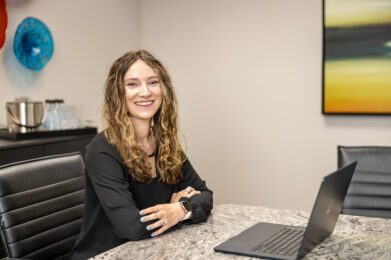
Sydney serves as the Director of Operations at Paths Law Firm, overseeing the firm’s internal processes, team coordination, and strategic initiatives. Since joining the firm in 2017, she has grown from an experienced paralegal and internal accountant into the central force behind the firm’s operational excellence.
She graduated with honors from the University of Missouri–Kansas City in 2022 with a Bachelor of Science in Accounting. Sydney is also a proud alumni member of Bloch Launchpad, Phi Theta Kappa, and the National Honor Society.
Outside of the office, Sydney enjoys spending time with her husband, reading, baking, and going on long walks.
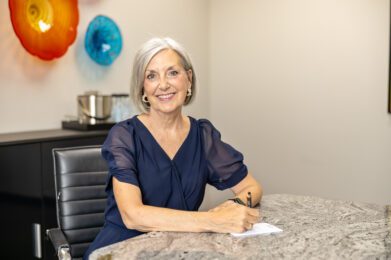
René is the Financial Manager at Paths Law Firm overseeing all aspects of revenue, expenses, and financial planning. She is also responsible for general office management, including assisting in many of the administrative matters that periodically arise.
René earned her Bachelor of Science in Hotel and Restaurant Management from Central Missouri State University in Warrensburg, Missouri and soon thereafter worked her way through management at The American Restaurant where she worked almost 17 years before relocating to the country of China.
In her spare time, René is currently quite active managing multiple generations of her family, including parents and grandkids. René has had great impact on the lives of many women teaching discipling and teaching and abundance of Bible Studies. Her former career in management and event planning trained her well to juggle all the activity.
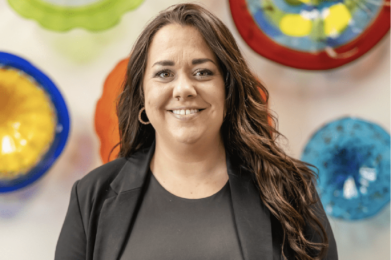
Hilary plays a vital role in managing the Marketing Department at Paths Law Firm. She is excellent at bringing new ideas and sharing valuable resources with the law firm and our community. Hilary has been with the law firm since the beginning, working in nearly every role which is invaluable in her marketing endeavors as she brings a unique set of skills into the Marketing Department.
Hilary is nearly complete in her Bachelor’s of Arts Degree in Marketing at Park University. She has earned the honor of being listed in National Honors Society, Phi Theta Kappa, and the Dean’s List. Hilary is always looking for new and innovative ways to share the law firm’s message.

When asked what he wants to do, his reply was “I just want to sit at the kitchen table and work directly with people.” Rusty enjoys working with clients providing experienced advocacy and supporting them through their unfamiliar and overwhelming situations. Due to all the challenges faced by seniors, it is essential to work with an experienced elder law attorney who has expertise in the law, issues, and concerns affecting seniors and their families.
Rusty brings more than 30 years legal experience and expertise working for seniors and their families as an elder law attorney in Kansas City and surrounding. Prior to law school, Rusty was an accountant and his first couple years practicing law was as a tax attorney. This provides invaluable experience in his current practice of law. Rusty’s focus is helping protect seniors’ assets from taxes and long-term care costs, benefit qualification, and navigating more complex family scenarios in their estate planning.
Rusty has personally experienced the loss every parent fears, caring for a spouse suffering with cancer and the treatment, and working with aging parents through all stages of their lives. He intimately understands the challenges faced by individuals and their caretakers when capacity or health declines, how to prepare for it, and the legal matters while in the midst of it. He may not be able to eliminate his client’s grief, but he strives to provide clients with peace of mind.
In 2010, Rusty’s faith and love led him and part of his family to China as Christian missionaries. He and his wife, went permanently, but ended up dedicating 3 years to that ministry. They returned to Missouri to help with grandchildren after a family tragedy and later began anew with Paths Elder Law. The goal is providing compassionate care through legal advocacy.
Rusty has multiple degrees and advanced study spanning his Bachelor’s of Arts in Business Administration – Accounting at Rockhurst College (now Rockhurst University), Masters of Arts in Accounting and in Intercultural Studies, as well as his Juris Doctorate from the University of Missouri at Kansas City School of Law.
When Rusty is not practicing law, he enjoys spending time with his family, grandchildren, and excessive eating at local restaurants.
Practice Areas
BSBA and Master’s in Accounting, Master’s in Inter-Cultural Studies, and Doctorate in Juris Prudence
Admissions to Practice
Professional Memberships and Affiliations